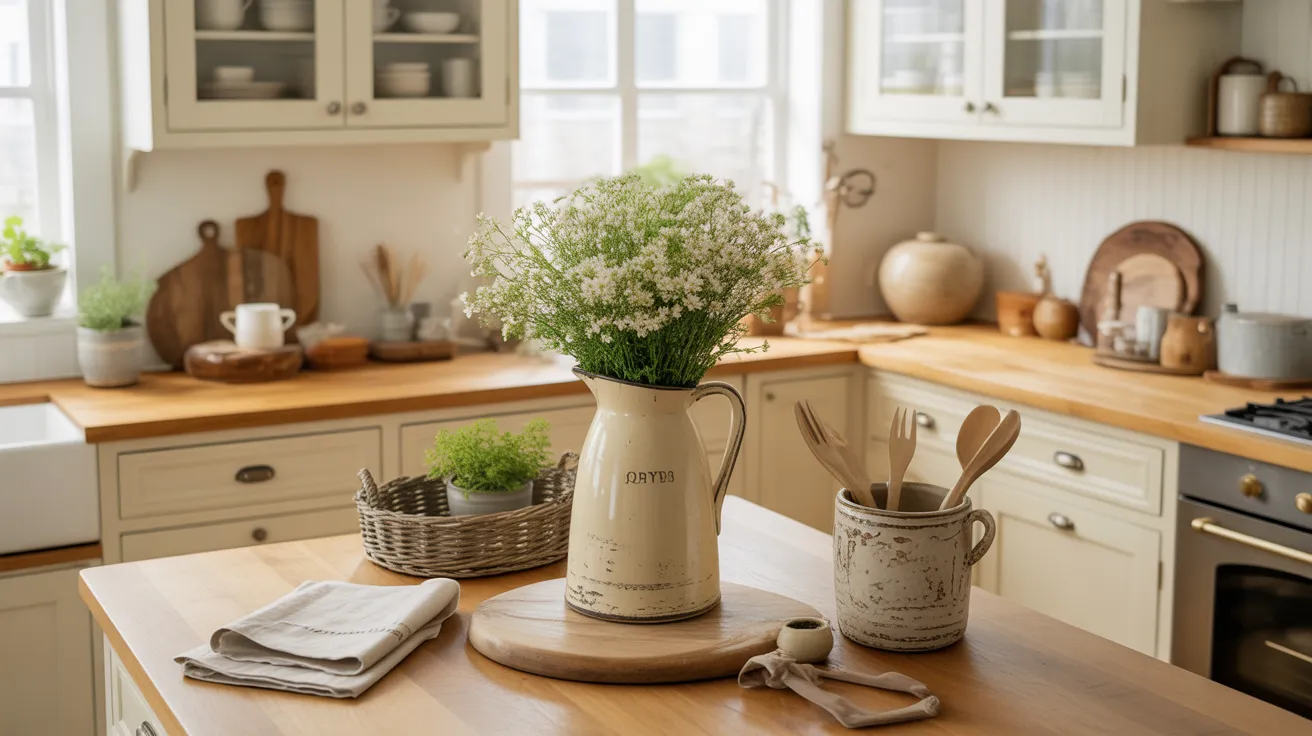
15 Cottage Kitchen Vignette Ideas Full of Cozy Charm
Small kitchen corners can hold a surprising amount of charm. The right few pieces can make an everyday counter feel warm, collected, and inviting.
These cottage kitchen vignette ideas show you how to create that cozy look without overcrowding your kitchen.
From vintage cutting boards and ceramic crocks to herb pots, woven baskets, and simple floral displays, each idea focuses on easy details you can actually use. You do not need a complete kitchen makeover or expensive decor to get started. In my experience, the most welcoming cottage kitchens often combine practical pieces with a few carefully chosen accents. Whether your style leans rustic, vintage, farmhouse, or soft and traditional, these ideas can help you create attractive little moments throughout your kitchen.
Vintage Cutting Board Display
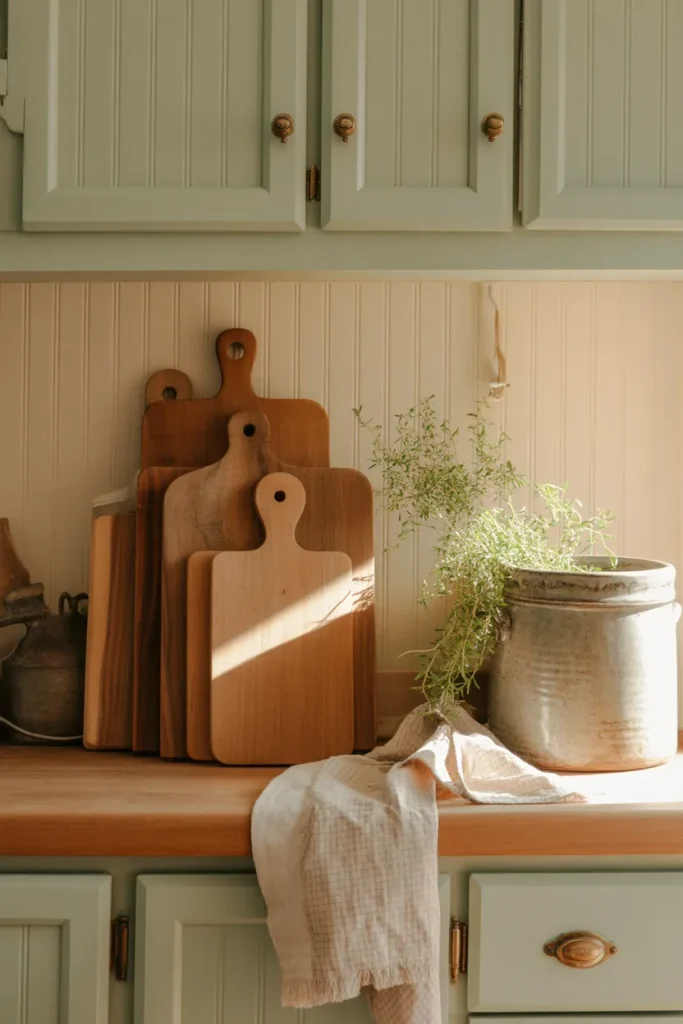
A stack of worn wooden cutting boards instantly gives a kitchen counter more character. Choose boards in different shapes and warm wood tones, then lean them against the backsplash rather than storing them away. Their imperfect edges add the relaxed quality that defines cottage style.
For extra texture, place a small crock or ceramic bowl beside the boards and add a folded linen towel. I’ve noticed that mixing useful kitchen pieces with decorative accents keeps a vignette from feeling staged. Keep the arrangement slightly uneven so it feels collected over time rather than perfectly matched.
Layered Ceramic Crocks
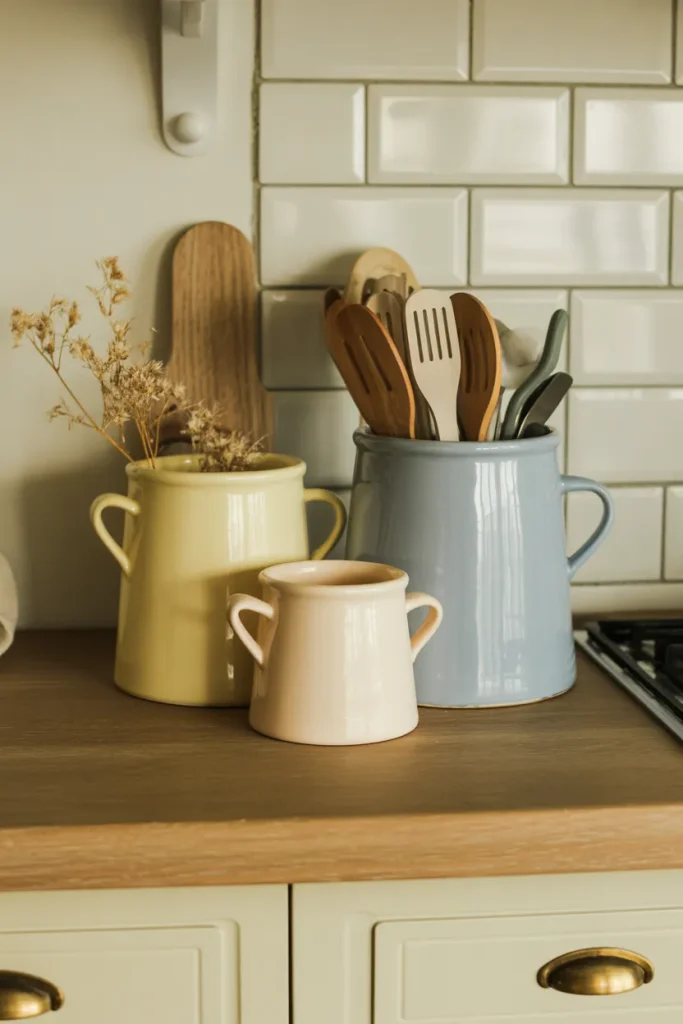
- Choose crocks in two or three complementary neutral shades.
- Vary their heights so the display has a natural layered shape.
- Fill one crock with wooden spoons and another with rolling pins.
- Leave one container empty to prevent the arrangement from looking crowded.
- Place the group near a backsplash corner or open shelf.
A small collection of crocks works especially well because it combines storage with decoration. For these cottage kitchen vignette ideas, look for pieces with subtle wear, handmade shapes, or slightly uneven finishes. Grouping similar materials creates visual connection while different heights keep the countertop display interesting and easy to recreate.
Also View: Blueberry Buttermilk Pancakes
Herb Pot Corner
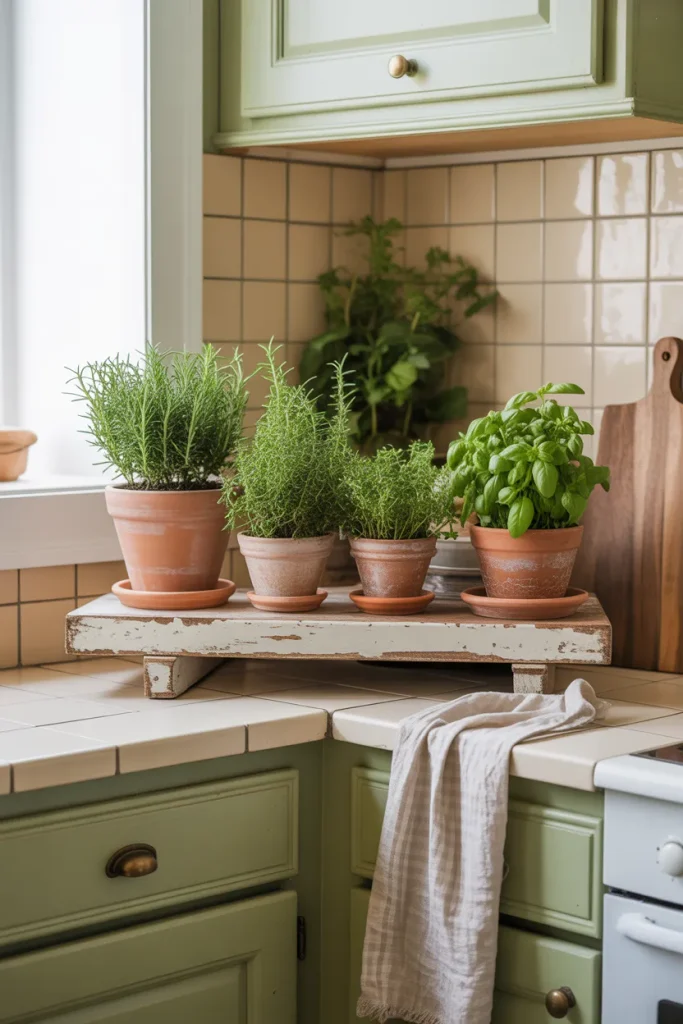
Fresh herbs bring a lived-in feeling to even the simplest kitchen counter. Arrange two or three small pots together on a wooden riser, keeping the tallest plant toward the back. Terracotta adds earthy color, while green foliage breaks up pale cabinets and neutral surfaces.
Choose herbs you actually cook with, such as basil, thyme, rosemary, or mint. Place the pots near a bright window where they can receive suitable light, and use a tray underneath to protect the countertop. In my experience, functional greenery feels more natural than decorative plants that serve no purpose.
Antique Tray Arrangement
BEFORE:
The counter feels scattered, with small decorative pieces sitting separately and no clear visual anchor. Useful items may also look cluttered when they are spread across the work surface.
AFTER:
A vintage tray gathers those pieces into one defined arrangement. The grouped objects feel intentional while leaving the surrounding counter open and functional.
A tray is especially useful for creating a compact kitchen vignette without buying lots of new decor. Choose one with visible wood grain, chipped paint, or aged metal, then layer two or three practical pieces inside it. Keep enough empty space around the tray so the arrangement remains easy to clean and use.
Open Shelf Styling
- Start with the largest pieces. Place a stack of plates, a basket, or a large crock toward one side of the shelf.
- Add medium pieces. Fill the center with mugs, bowls, or a small framed print.
- Finish with small accents. Add a tiny plant, wooden utensil, or ceramic piece to fill visual gaps.
- Leave breathing room. Avoid filling every inch, especially on narrow kitchen shelves.
Open shelving gives everyday kitchenware a decorative role while keeping frequently used pieces within reach. For a softer cottage look, combine cream ceramics with muted blue, sage, or warm wood. I’ve seen balanced asymmetry work better than matching rows, so vary heights and shapes while repeating two or three colors.
Linen and Bread Board
| Styling Choice | Option A | Option B |
| Main piece | Large wooden bread board | Small ceramic platter |
| Textile | Natural linen | Checked cotton towel |
| Accent | Fresh bread | Ceramic bowl |
| Overall feel | Rustic and warm | Light and simple |
A bread board paired with linen creates a simple focal point with very little effort. Choose natural fabrics and lightly weathered wood to keep the arrangement relaxed. Fresh bread adds an everyday touch, but a ceramic bowl or small fruit dish can replace it when you want a longer-lasting display.
Woven Basket Display
DO:
- Choose a basket with natural fibers and a slightly uneven weave.
- Fill it with useful linens, napkins, or lightweight kitchen tools.
- Keep the colors within cream, beige, tan, and muted green tones.
- Position it against a wall or beside a larger cutting board.
DON’T:
- Overfill the basket until its shape disappears.
- Mix several competing patterns in one small arrangement.
- Place loose food items where they may collect dust.
- Use a basket that blocks drawers, outlets, or prep space.
A woven basket adds softness to hard kitchen surfaces while providing practical storage. I’ve noticed that shallow baskets work particularly well for countertop vignettes because they create height without taking over the workspace. Add one simple botanical element for a natural cottage touch, but let the basket remain the main feature.
Floral Pitcher Focal Point
Cost: Low to moderate | Time: 10 minutes | Skill Level: Beginner
Best For: Empty counters, kitchen islands, and dining nooks
Color Palette: Cream, soft green, blush, natural wood
Result: A simple focal point with height and color
A vintage pitcher can anchor a vignette while bringing soft color into a neutral kitchen. Use fresh flowers when available or choose dried stems for a longer-lasting display. Keep the arrangement loose rather than tightly packed. A few stems extending at different heights will give the pitcher a relaxed, gathered-from-the-garden character.
Vintage Clock Nook
A small vintage clock can give an otherwise plain kitchen corner a clear focal point. Choose a round design with a cream, black, or muted brass face, then surround it with two or three low-profile pieces. The goal is to create a layered corner without covering too much useful wall or counter space.
Keep the clock slightly higher than the surrounding objects so the eye naturally moves upward. A botanical print or small ceramic jug can soften the arrangement beneath it. For a cohesive cottage kitchen vignette, repeat one material already present nearby, such as aged wood, brass, or handmade pottery.
Wooden Spoon Collection
- Gather similar utensils. Choose wooden spoons, spatulas, and serving tools with varied shapes but similar warm wood tones.
- Pick a character-filled container. Use a ceramic crock, stoneware pitcher, or vintage metal holder.
- Create height. Place taller utensils toward the back and shorter ones in front.
- Add one soft accent. Drape a linen towel nearby or place a small herb pot beside the crock.
A visible spoon collection makes the kitchen feel practical and lived in rather than overly decorated. Look for utensils with natural grain and gentle signs of use instead of perfectly identical pieces. Keep the crock close to the cooking area so the arrangement serves a purpose every day, not just for photographs.
Layered Cutting Boards
| Styling Point | Option A | Option B |
| Board shapes | Mixed shapes | Matching shapes |
| Wood finish | Light and medium tones | One consistent tone |
| Placement | Leaned in layers | Stacked flat |
| Visual effect | Collected and rustic | Clean and simple |
Layered boards create height and texture without requiring many decorative objects. Choose two or three sizes that overlap slightly, then lean them against the backsplash at different angles. A small bowl or linen towel can sit in front to connect the arrangement. This approach works especially well for narrow counters with limited decorating space.
Soft Window Sill Vignette
Quick Tip:
Keep window sill decor low enough to preserve natural light and your view. Choose only two or three pieces, then vary their heights slightly so the arrangement feels balanced without looking crowded.
A sunny sill is an ideal spot for small cottage accents because the window already provides a natural focal point. Try a petite vase, glass jar, or herb pot in soft neutral shades. In my experience, keeping the palette restrained helps the greenery stand out while maintaining that light, relaxed cottage character.
Farmhouse Sink Shelf
BEFORE:
The area around the sink feels plain and disconnected from the rest of the kitchen. Everyday cleaning supplies may also create visual clutter.
AFTER:
A narrow shelf adds a defined decorative layer without taking valuable counter space. Grouping a pitcher, folded towel, and small plant creates a cohesive focal point above the sink.
Keep the arrangement practical because this is a high-use area. Choose washable textiles and sturdy ceramics that can handle occasional splashes. A small shelf also gives you a place to display cottage-style pieces while keeping the countertop clear for washing dishes, preparing food, or setting down groceries.
Breakfast Nook Tray
- Choose a compact tray. Select a round or rectangular wooden tray that leaves plenty of table space around it.
- Add the daily essentials. Place two mugs, a small bowl, and folded napkins inside.
- Introduce one natural element. Add a tiny vase with seasonal flowers or a few leafy stems.
- Keep the center accessible. Arrange everything so the tray can be lifted easily when the table is needed.
A breakfast nook becomes more inviting when everyday items are grouped into one intentional display. Warm wood, simple ceramics, and natural fabric reinforce the relaxed cottage look without making the table feel formal. This setup also makes morning routines easier because frequently used pieces stay together and ready for use.
Stoneware and Brass
| Material | Option A | Option B |
| Ceramic | Matte cream stoneware | Glossy white pottery |
| Metal | Aged brass | Polished brass |
| Wood | Warm oak | Pale birch |
| Overall effect | Soft and vintage | Bright and refined |
Combining stoneware with aged brass creates subtle contrast without relying on bold colors. Start with one larger ceramic piece, then add a small brass accent nearby. Warm wood underneath helps connect the materials. Keep the metallic details limited so they add character rather than competing with the softer cottage finishes.
CONCLUSION
Creating a cozy kitchen does not require a complete makeover or a large decorating budget. These cottage kitchen vignette ideas show how small details, natural materials, vintage touches, and useful everyday pieces can bring warmth and personality to overlooked corners.
Start with one area, such as a counter, shelf, or window sill, and build your arrangement slowly. I’ve seen how small changes like these can completely shift the way a space feels. Save this post on Pinterest so you can return to your favorite ideas later, then try one today. Share it with a friend who loves cozy cottage style and let the decorating inspiration spread.
One Comment